
Astrophysics
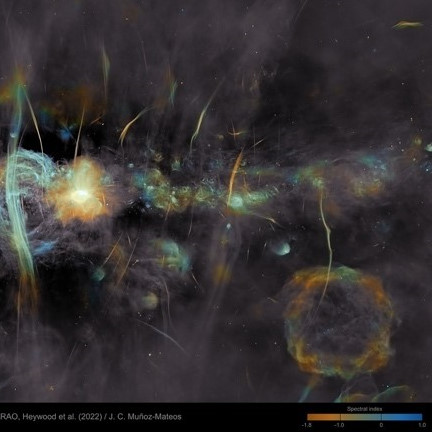 Astrophysics is the fundamental science that employs methods and principles of physics and chemistry to study the Universe and its components. Its foundations lay on the modern physics theories on gravity, matter, and fundamental interactions as well as on observations carried out on the whole electromagnetic spectrum, on the detection of elementary particles, and on the observation of gravitational waves. Astrophysics aims at explaining the nature of a very large variety of objects and physical phenomena, the composition and the evolution of the Universe. It comprises a vast range of subjects: from the circum-terrestrial environment to the most distant observable objects, from planets to black holes, from planetary systems to clusters of galaxies. Astrophysics contributes also to the validation of fundamental physics, providing observed data on physical condition not reproducible in laboratories on Earth. Astrophysics research at DFA is focused on some of the most relevant issues and enjoys synergies with the local branches of the national institutes for astrophysics (INAF) and nuclear physics (INFN).
Cosmology
Faculty: Andrei Mesinger, Giuseppe Puglisi, Antonino Del Popolo,Fiorenzo Vincenzo
 Cosmology is the branch of astrophysics that seeks to understand the universe as a whole: its origin, structure, evolution, and ultimate fate. It brings together observations (e.g. of galaxies, cosmic radiation fields, the intergalactic medium, and large-scale structures) with theoretical frameworks such as the Big Bang and general relativity to explain how our Universe began about 13.8 billion years ago and how it has been evolving ever since. Research in Catania covers a broad range of topics in cosmology, including the primordial Universe, the birth of the first galaxies, the web-like intergalactic medium, as well as the unknown nature of dark matter and dark energy. We have leading roles in international telescope consortia (e.g. HERA, SKA, LiteBIRD, Simons Observatory, Subaru). Our work confronts cosmological observations with state-of-the-art simulations in order to learn about our Universe.
Galactic Astronomy and Stellar Physics
Faculty: Alessandro Lanzafame, Francesco Leone, Maria Letizia Pumo, Fiorenzo Vincenzo
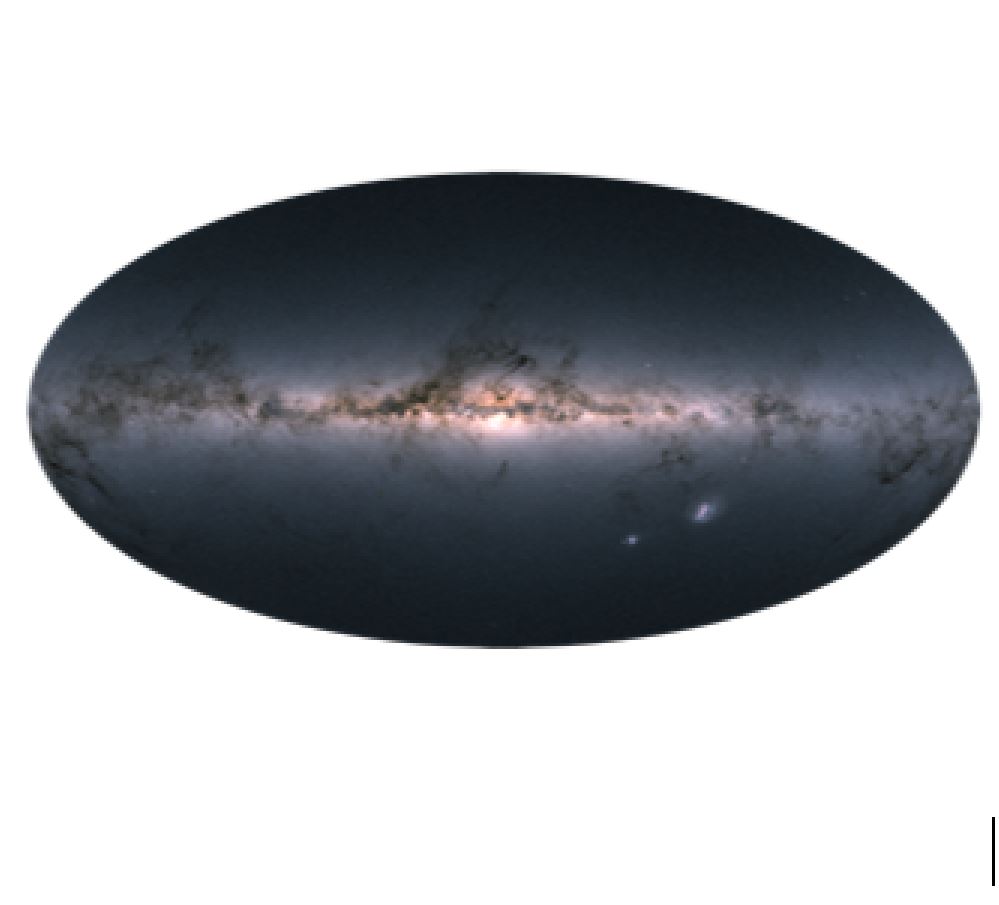
Galactic astronomy studies the formation, structure and evolution of our Galaxy. It requires knowledge of the positions, motions and physical nature of stars, planets, the interstellar medium and dark matter. Stellar Physics studies, in particular, the structure and evolution of stars, from formation to the final stages such as white dwarfs, neutron stars and black holes. It helps us understand, for example, how stars affect the Galaxy as a whole or how planets form. The study of the interaction with nearby galaxies constitutes a fundamental element of the nascent Local Cosmology, which connects Galactic Astronomy with cosmological theories.
Solar Physics and Plasmas

Faculty: Alessandra Giunta
Matter in the Sun is in an aggregation state called plasma, characterized by the presence, in addition to neutral atoms, also of a high percentage of ions and electrons. Due to its proximity, the Sun allows us to directly observe with high spatial resolution the properties of a plasma, in much greater detail than is possible for other astrophysical objects. In addition, the recent development of instrumentation and techniques used for the measurement of solar magnetic fields (spectropolarimetry), both from Earth and from satellites, has further enriched our knowledge on how localized magnetic fields and solar plasma can interact.
