Controlling microalgae populations by phototactic memory
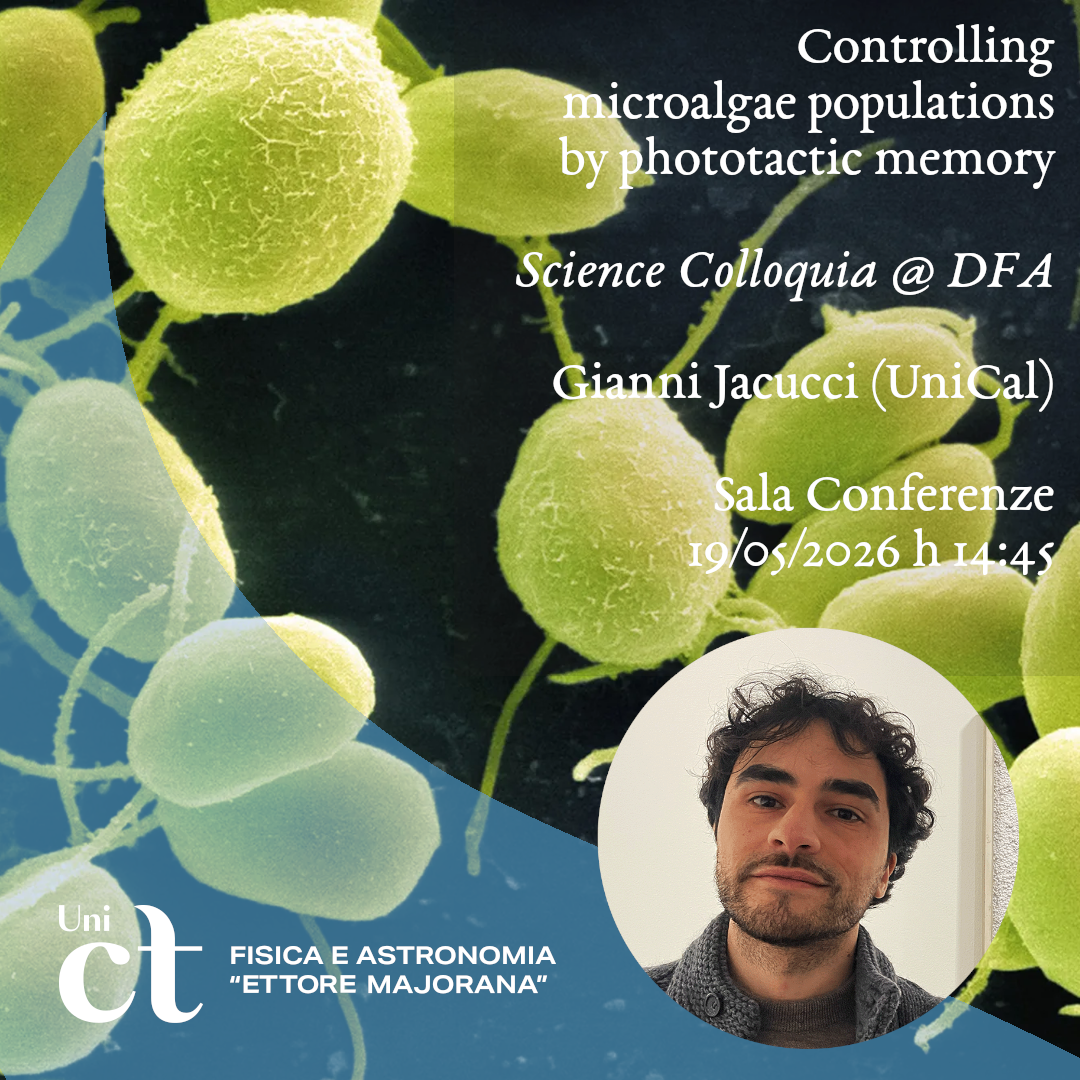
Light is one of the most universal environmental signals: it carries energy, but also information. Many organisms have evolved strategies to read this signal and respond—sometimes with astonishing efficiency, using minimal sensory machinery. In this lecture I will discuss how we can use structured optical environments to interrogate and steer living active matter. Using motile microalgae as a model, I will show how spatially varying light fields uncover navigation rules that go beyond simple “turn toward the lamp”: cells combine local cues with short-term temporal integration, and this can lead to robust population-level localisation. Beyond fundamental biophysics, these ideas suggest a route to sustainable control protocols— using light instead of reagents, exploiting biological strategies for low-power sensing, and transferring design principles from living photonics to engineered materials and devices [1].
References
[1] G. Jacucci, D. Breoni, P. Illien, L. Tubiana, J.-F. Allemand, S. Gigan, and R. Jeanneret, “Controlling microalgae populations by phototactic memory,” arXiv, 2026, arXiv:2601.07741. doi: 10.48550/arXiv.2601.07741.